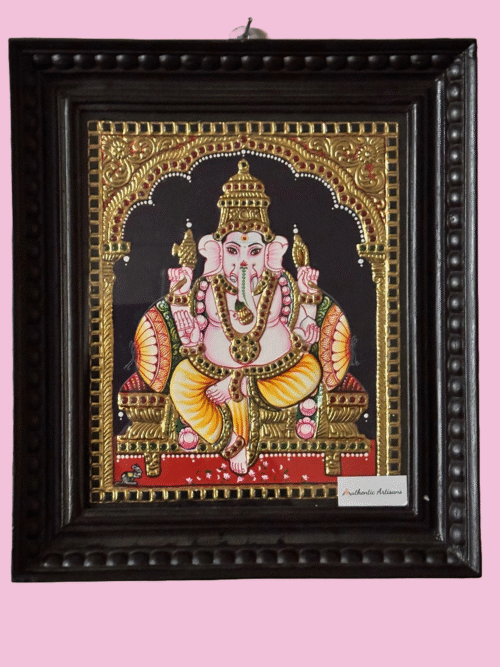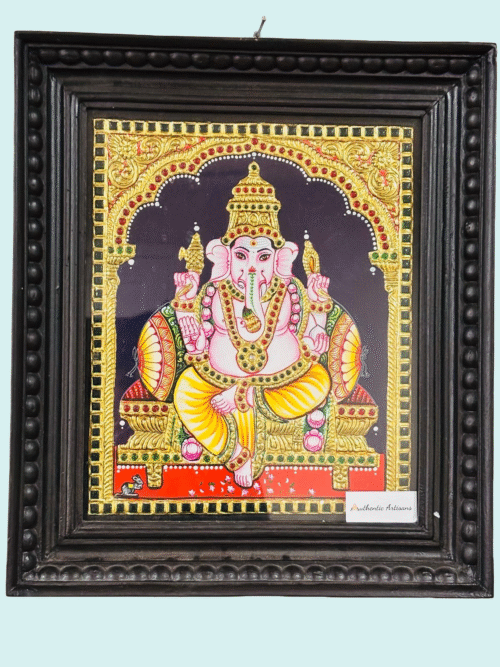
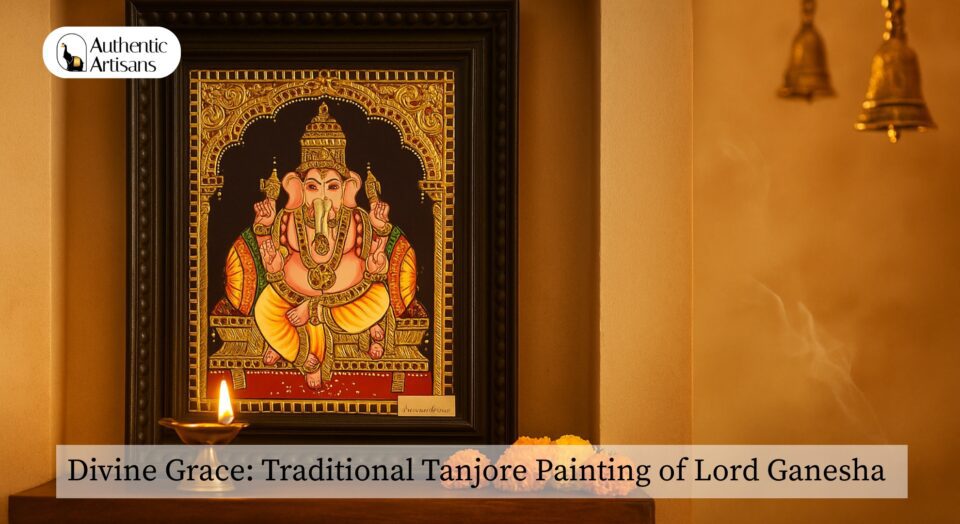
In the rich tapestry of Indian heritage, Tanjore painting stands as a shining example of devotion, tradition, and artistry. Among the various depictions of Hindu gods, Lord Ganesha—the elephant-headed deity of wisdom and prosperity—holds a special place in the hearts of devotees and art connoisseurs alike. The traditional Tanjore painting of Lord Ganesha is not just an artwork, but a spiritual experience that combines divine symbolism with exquisite craftsmanship.
In this blog, we will take you on a journey through the history, technique, spiritual significance, and contemporary relevance of Tanjore painting, with a divine focus on the benevolent Ganesha God. Whether you’re an art enthusiast, a cultural explorer, or someone looking to add an aura of divine grace to your space, this article will give you a deep insight into one of India’s most cherished art forms.
The Legacy of Tanjore Painting
Originating in the 16th century in Thanjavur (anglicized as Tanjore) in Tamil Nadu, this art form flourished under the patronage of the Nayakas and Marathas. Tanjore painting was traditionally used to depict Hindu gods and deities in grand, divine form—surrounded by intricate patterns and glistening gold leaf.
Crafted on wooden planks, each painting showcases meticulous handwork, elevated surfaces, and bold, vibrant colours. The signature characteristic is the generous use of 22-karat gold foil, giving each piece a divine radiance.
Why Lord Ganesha is a Central Theme
Lord Ganesha holds a special place in Indian mythology and daily worship. Known as Ganpati Bappa, Ganapati Ji, and Ganpati, he is the god of beginnings, invoked before any major endeavour or ceremony. His iconography is rich in symbolism:
- Elephant head – wisdom and intelligence
- Large ears – ability to listen
- Broken tusk – sacrifice and selflessness
- Mouse vehicle – control over desires
- Modaks – rewards of spiritual pursuit
In the world of Tanjore painting, Lord Ganesha’s vibrant persona comes alive with luxurious ornamentation and symbolic elements that make each piece spiritually profound and artistically striking.
The Traditional Process of Tanjore Painting
Creating a Tanjore painting is a labour-intensive process passed down through generations of skilled artisans. The process involves:
1. Base Preparation
A wooden plank (often jackfruit or teakwood) is coated with cloth and a mixture of chalk powder and adhesive to form a smooth surface.
2. Sketching
The deity—Ganesha in this case—is sketched in precise detail, often reflecting traditional postures and motifs.
3. Relief Work
To give a 3D effect, a paste of limestone and glue is applied to highlight ornaments and embellishments.
4. Gold Foil Application
Authentic Tanjore painting uses real gold foil (22K), especially on crowns, jewellery, and backdrops, which catch light and give the painting its divine lustre.
5. Colouring
Bright, bold colours fill the canvas—reds, blues, greens—giving life to the Ganesha God and the divine ambiance.
6. Final Touches
Details such as expressions, motifs, and additional textures are refined to complete the painting.
Spiritual and Aesthetic Significance
Owning a Tanjore painting of Lord Ganesha is not just about adorning a wall—it is about invoking divine grace into your living space. These paintings are believed to radiate positive vibrations and serve as visual prayers.
During festivals like Ganesh Chaturthi, a Tanjore painting makes a perfect spiritual centrepiece, enhancing the sacred atmosphere. Many devotees also commission custom paintings of Ganapati Bappa to commemorate special life events like weddings, housewarmings, or births.
- Styles of Ganesha Depictions in Tanjore Painting
- Bal Ganesha (Child Form)
Portrayed with innocent charm, Bal Ganesha is often shown playing with sweets or seated on a lotus. This form is ideal for children’s rooms or gifting to new parents.
- Nritya Ganesha (Dancing Form)
Symbolizing joy and divine rhythm, Dancing Ganesha adds an energetic and festive aura to any space.
- Mool Ganesha (Original Form)
In his traditional seated posture with four arms, Modak in hand, and serene expression, this depiction is the most popular for pooja rooms and altars.
- Ganesha with Riddhi-Siddhi
This traditional composition includes Ganesha with his consorts—symbolizing material and spiritual wealth.
- Decorating with Tanjore Painting of Lord Ganesha
Incorporating a Tanjore painting into your décor is both a design choice and a spiritual one. Here are some placement ideas:
- Entrance Foyers – Welcome guests with divine blessings.
- Pooja Rooms – Create a sacred focal point for daily worship.
- Living Rooms – Add cultural elegance and conversation starters.
- Offices or Workspaces – Invite success and remove obstacles.
As per Vastu Shastra, placing Lord Ganesha’s image facing the entrance or northeast corner of your space attracts prosperity and peace.
Tanjore Painting vs Other Forms of Ganesha Art
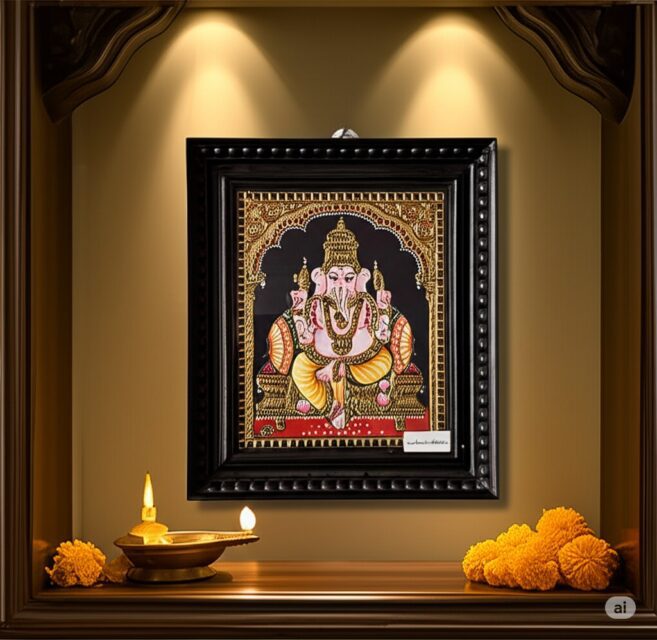
While Lord Ganesha is represented in various mediums like stone sculptures, digital prints, and canvas paintings, Tanjore painting remains unmatched in richness and tradition. Here’s why:
| Feature | Tanjore Painting | Other Forms |
| Material | Gold foil, wood, natural colours | Paper, canvas, metal |
| Aesthetic Value | Luxurious, divine, 3D | Varies |
| Spiritual Appeal | High | Moderate to High |
| Heritage Value | Timeless, classical | Modern to semi-traditional |
Why Buy from Authentic Artisans?
At Authentic Artisans, we work with skilled craftsmen from South India who practice the age-old techniques of Tanjore painting. Each piece:
- Uses authentic 22K gold foil
- Is handcrafted using traditional tools and materials
- Comes with a certificate of authenticity
- Is customizable to match your preferences or Vastu needs
When you buy from us, you not only receive a work of sacred art, but you also support the livelihoods of India’s gifted artisans.
Ideal for Festivals and Gifting
Whether it’s Ganesh Chaturthi, Diwali, or a new beginning, a Tanjore painting of Ganapati Bappa makes a meaningful gift. It’s perfect for:
- Housewarming gifts
- Wedding presents
- Baby showers
- Spiritual occasions
- Corporate gifts with cultural value
Unlike mass-produced items, each Tanjore painting is unique making it a priceless keepsake.
Preserving and Caring for Tanjore Paintings
These paintings are durable, but with some care, they can last generations:
- Keep away from direct sunlight and moisture
- Wipe gently with a dry, soft cloth
- Frame with glass for added protection
- Store in a clean, dry space when not on display
With proper care, your Ganesha Tanjore painting can become a cherished heirloom passed through generations.
Invite Divine Grace into Your Life
In a world filled with fleeting digital art and mass production, the traditional Tanjore painting of Lord Ganesha stands as a beacon of authenticity, divinity, and timeless beauty. It is not merely a decoration—it is divine grace captured on wood, blessed with gold, and born from the skilled hands of artists who treat their craft as a sacred duty.
Whether you’re celebrating Ganesh Chaturthi, starting a new journey, or simply enriching your home with culture and spirituality, a Tanjore painting of Ganapati Ji is a choice that resonates with soul and tradition.
Explore our exclusive collection of Ganesha Tanjore Paintings at Authentic Artisans. Bring home blessings, heritage, and unmatched craftsmanship.